Ultima Markets App
Trade Anytime, Anywhere





Important Information
This website is managed by Ultima Markets’ international entities, and it’s important to emphasise that they are not subject to regulation by the FCA in the UK. Therefore, you must understand that you will not have the FCA’s protection when investing through this website – for example:
- You will not be guaranteed Negative Balance Protection
- You will not be protected by FCA’s leverage restrictions
- You will not have the right to settle disputes via the Financial Ombudsman Service (FOS)
- You will not be protected by Financial Services Compensation Scheme (FSCS)
- Any monies deposited will not be afforded the protection required under the FCA Client Assets Sourcebook. The level of protection for your funds will be determined by the regulations of the relevant local regulator.
Note: Ultima Markets is currently developing a dedicated website for UK clients and expects to onboard UK clients under FCA regulations in 2026.
If you would like to proceed and visit this website, you acknowledge and confirm the following:
- 1.The website is owned by Ultima Markets’ international entities and not by Ultima Markets UK Ltd, which is regulated by the FCA.
- 2.Ultima Markets Limited, or any of the Ultima Markets international entities, are neither based in the UK nor licensed by the FCA.
- 3.You are accessing the website at your own initiative and have not been solicited by Ultima Markets Limited in any way.
- 4.Investing through this website does not grant you the protections provided by the FCA.
- 5.Should you choose to invest through this website or with any of the international Ultima Markets entities, you will be subject to the rules and regulations of the relevant international regulatory authorities, not the FCA.
Ultima Markets wants to make it clear that we are duly licensed and authorised to offer the services and financial derivative products listed on our website. Individuals accessing this website and registering a trading account do so entirely of their own volition and without prior solicitation.
By confirming your decision to proceed with entering the website, you hereby affirm that this decision was solely initiated by you, and no solicitation has been made by any Ultima Markets entity.
I confirm my intention to proceed and enter this website Please direct me to the website operated by Ultima Markets , regulated by the FCA in the United KingdomEurozone Inflation Cools, Markets Eye ECB’s Next Move

Eurozone Inflation Cools, Markets Eye ECB’s Next Move
The Eurozone Harmonized Consumer Price Index (HICP) for February came in slightly lower than the expected 2.5%, easing to 2.4% from 2.5% in January. Meanwhile, the Core Consumer Price Index, which excludes volatile energy, food, alcohol, and tobacco prices, declined to 2.6% from 2.7% in January, marking its lowest level since January 2022.
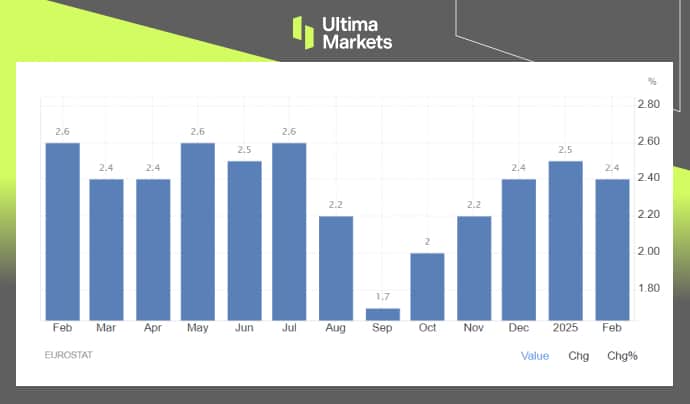
(Euro Zone Inflation Rate; Source: Trading Economics)
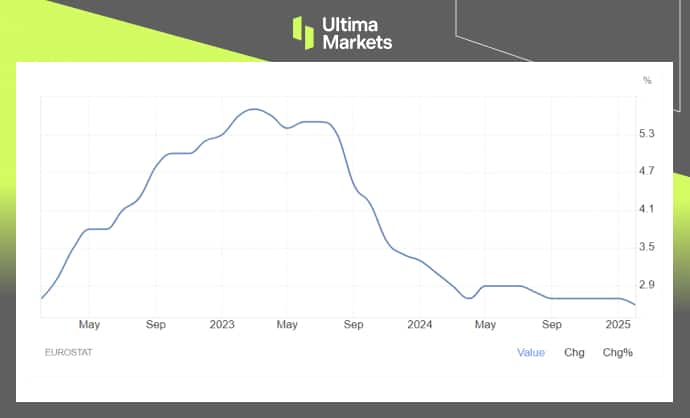
(Euro Zone Core Inflation Rate: Source; Trading Economics)
The decline in annual inflation is largely attributed to energy costs, which rose by only 0.2% in February—a significant slowdown from the 1.9% increase in January. This trend aligns with the European Central Bank’s (ECB) target of maintaining inflation close to 2%.
Market Implications for ECB Monetary Policy
The moderation in inflation reinforces expectations that the ECB may cut interest rates by a quarter point to 2.5% in Thursday’s meeting, aiming to boost economic growth by lowering borrowing costs.
While a cut is widely expected, ECB policymakers remain divided on the pace and extent of further easing. Despite sluggish eurozone growth, uncertainties like potential U.S. tariffs, political instability in France and Germany, and the Ukraine crisis complicate the ECB’s decision-making.
Some ECB officials warn that excessive cuts could destabilize the economy, urging caution. This leaves markets speculating whether the ECB will opt for a dovish or hawkish cut in March.
ECB March Meeting: A Hawkish Cut?
Following the release of Euro Area CPI data, the euro strengthened against major currencies, including the US dollar. This is largely due to market expectations of a hawkish cut from the ECB in its March meeting.
With inflation aligning with the ECB’s 2% target, policymakers may adopt a more cautious approach to easing after the March cut, as there is no urgent need for further rate reductions, especially amid ongoing economic uncertainties.
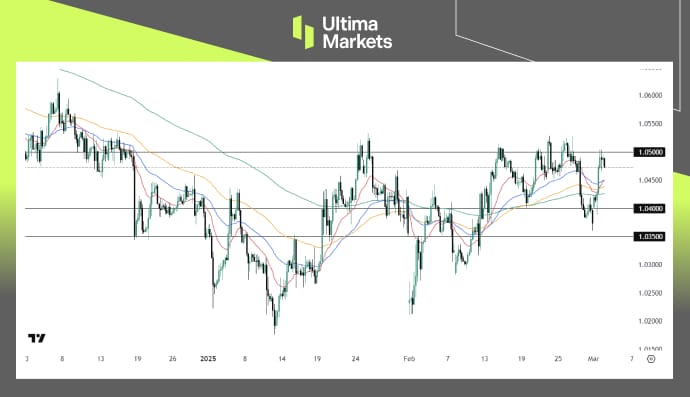
(EURUSD, 4-H Chart Analysis; Source: Trading View)
EUR/USD surged to its key resistance at 1.0500 again after the Euro CPI release. While the ECB repricing has strengthened the euro, it still faces resistance near 1.0500.
From a technical perspective, EUR/USD may continue to consolidate below 1.0500 as the market lacks a strong bullish catalyst for the euro.
Disclaimer
Comments, news, research, analysis, price, and all information contained in the article only serve as general information for readers and do not suggest any advice. Ultima Markets has taken reasonable measures to provide up-to-date information, but cannot guarantee accuracy, and may modify without notice. Ultima Markets will not be responsible for any loss incurred due to the application of the information provided.
Ultima Markets에서 금속 및 원자재 거래를 하는 이유는 무엇인가요?
Ultima Markets는 전 세계적으로 널리 사용되는 원자재에 대해 가장 경쟁력 있는 비용과 거래 환경을 제공합니다.
거래 시작하기이동 중 시장 모니터링
공급과 수요의 변화에 민감한 시장
가격 투기에만 관심이 있는 투자자에게 매력적
숨겨진 수수료 없는 깊고 다양한 유동성
딜링 데스크 없음 및 재호가 없음
Equinix NY4 서버를 통한 빠른 실행


Ultima Markets는 금융위원회(The Financial Commission)의 회원입니다. 금융위원회는 국제적으로 Forex 및 CFD 시장에서 분쟁을 해결합니다

Ultima Markets의 모든 고객님께서 1828년에 설립된 글로벌 보험 중개회사, Willis Tower Watsons (WTW)이 제공하는 보험 보장 하에 보호되며, 계좌당 최대 US$1,000,000 까지의 청구 자격이 있습니다.
TRADE WITH US


위험 고지
위험 경고:
레버리지 금융상품(차액결제거래 포함)은 고위험 상품으로, 거래 손실이 초기 투자금액을 초과할 수 있습니다. 이러한 상품은 모든 투자자에게 적합하지 않을 수 있으므로, 반드시 감당 가능한 손실 범위 내 자금으로만 거래하시기 바랍니다. 차액결제거래(CFD)는 해당 기초자산(예: 배당권 등)의 소유권을 의미하지 않습니다. 관련 리스크를 충분히 이해하고, 본인의 투자 경험 및 목표에 따라 거래의 적합성을 신중히 판단해 주십시오. 필요한 경우, 독립적인 재무 전문가의 조언을 구하시기 바랍니다. 모든 거래 결정을 내리기 전, 당사의 법률 문서 및 위험 공시를 반드시 주의 깊게 숙독해 주시기 바랍니다.
일반 조언에 대한 고지:
본 웹사이트에 제공된 정보는 일반적인 참고용이며, 귀하의 개인 투자 목표, 재무 상황 또는 특정 니즈를 반영한 맞춤형 조언이 아닙니다. 어떠한 투자 행동을 취하기 전, 해당 조치가 귀하의 상황에 적합한지 충분히 평가하고, 당사의 법률 문서를 참고하시기 바랍니다.
지역 제한 고지:
본 웹사이트에서 제공되는 정보 및 서비스는 일부 지역 사용자에게 적용되지 않을 수 있으며, 미국, 영국, 싱가포르 및 국제 제재 대상 지역이 포함되나 이에 국한되지 않습니다. 자세한 내용은 고객센터로 문의해 주시기 바랍니다.
규제 정보:
Ultima Markets is a trading name shared amongst multiple entities operating in various jurisdictions. These following entities are authorised to operate under the Ultima Markets brand and trademarks.
-
Ultima Markets UK Limited(등록번호 470325)는 영국 금융행위감독청(FCA)의 인가 및 규제를 받는 금융 서비스 기관입니다. 등록 주소: One Fleet Place, London, EC4M 7WS, United Kingdom.
-
Ultima Markets Ltd는 모리셔스 금융서비스위원회(FSC)의 인가 및 규제를 받은 전면 투자업 라이선스(인수 업무 제외) 보유 업체이며, 라이선스 번호는 GB 23201593입니다.
등록 주소: 2nd Floor, The Catalyst, 40 Silicon Avenue, Ebene Cybercity, 72201, Mauritius.

저작권 © 2025 Ultima Markets Ltd. 모든 권리 보유.
-

Messenger


Continue on Messenger
Take the conversation to your Messenger account. You can return anytime.
Scan the QR code and then send the message that appears in your Messenger.
Open Messenger on this device.
-
Instagram
Continue on Instagram
Take the conversation to your Instagram account. You can return anytime.
Scan the QR code to open Instagram. Follow @ultima_markets to send a DM.
Open Instagram on this device.
-
Live Chat
-